Laser therapy
Low-Level Laser Therapy (LLLT) / photobiomodulation as adjunctive support in pain and soft-tissue care.
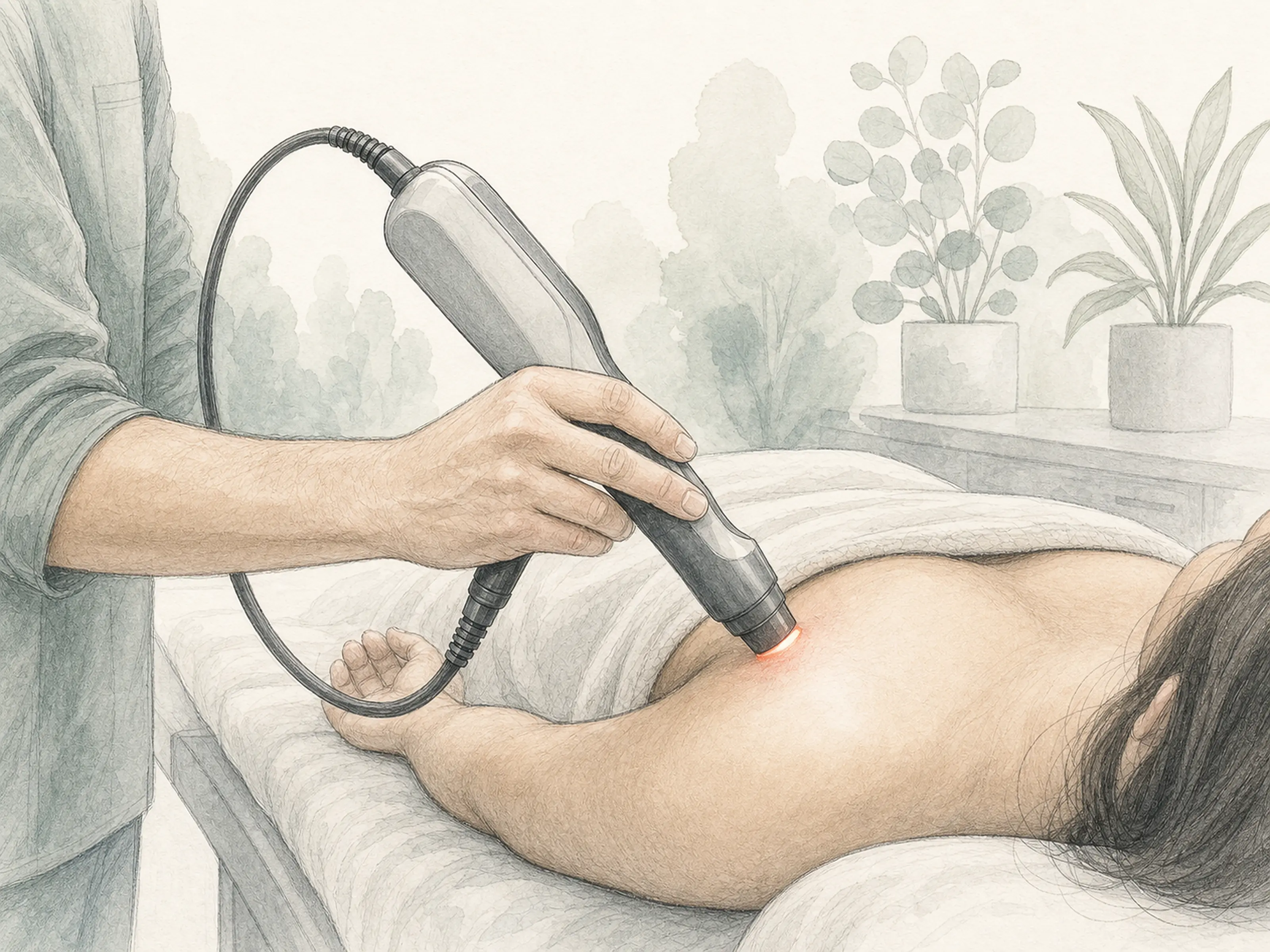
Low-Level Laser Therapy (LLLT), scientifically referred to as photobiomodulation, is a physiotherapy method utilizing specific wavelengths of light to influence cellular processes. Known as a "cold laser," the aim of the therapy is not to heat the tissue.
Photobiomodulation may influence cellular signalling. Clinical results depend on the condition and treatment parameters, and evidence is not equally strong for all indications. We therefore use it as adjunctive support rather than a replacement for diagnosis or active rehabilitation.
Who it is for.
Who it is for
After individual assessment, it may be used as adjunctive care for:
- selected tendinopathies and soft-tissue concerns
- acute injuries (sprains, muscle strains, and contusions)
- some degenerative conditions when the goal is symptom support
- pain syndromes (neck pain, lower back pain, or shoulder discomfort)
Key benefits
Possible effects depend on dose and individual response:
- inflammatory-response modulation: used as adjunctive support when tissue sensitivity or swelling is present
- pain management: used as an adjunctive modality for pain-symptom modulation
- tissue repair support: helping create more favorable conditions for soft-tissue recovery as part of broader rehabilitation
How the treatment works.
Ready to book a session?
Call us or send a message and we will find the best time for you.