Physiotherapy service
Therapeutic massage
Targeted manual care for short-term reduction of soft-tissue tightness and sensitivity.
01 /Service description
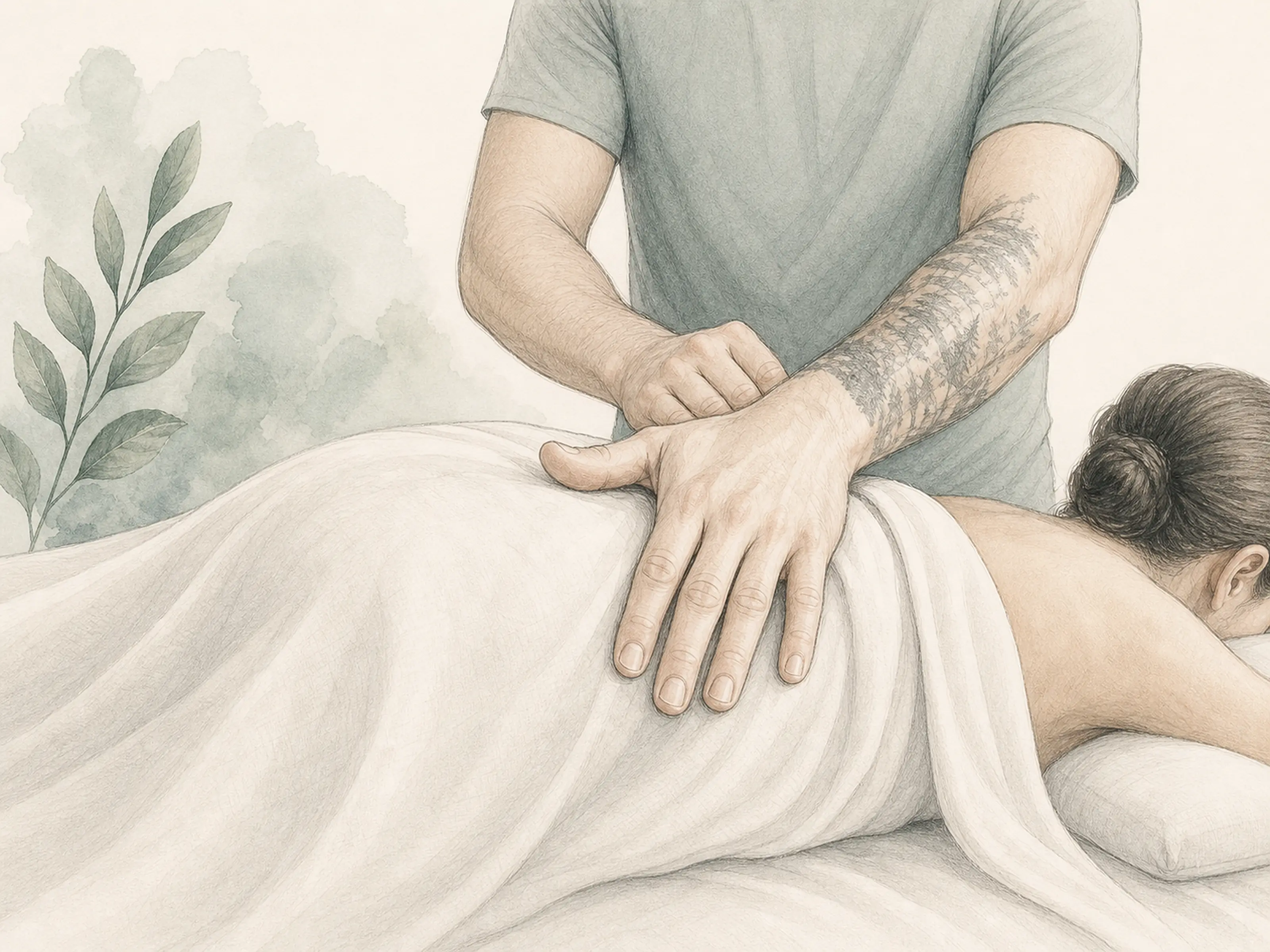
Therapeutic massage is targeted manual care of soft tissues. The physiotherapist adapts the techniques and pressure to the concern and the patient's response. It may provide short-term relief of perceived tightness or pain and make movement feel easier. For most musculoskeletal concerns, it is used alongside education, exercise, and a gradual return to activity.
02 /Indications & benefits
Who it is for.
Who it is for
- Chronic Pain: Long-standing pain in the spine (lower back, neck) and joints.
- Increased Muscle Tone: Individuals with tight, rigid muscles (hypertonicity) due to stress or poor posture (e.g., sedentary office work).
- Tension Headaches: Headaches originating from tension in the neck muscles.
- Athletes: As support after exertion and for maintaining soft-tissue mobility.
Key benefits
- Circulation: mechanical pressure can temporarily influence blood flow and venous and lymphatic flow in the treated area.
- Reduction of Muscle Tension: Direct stretching and kneading of muscle fibers help relax tight muscle bundles and \"knots\" (myogelosis).
- Soft-tissue mobility: manual techniques may temporarily improve the feeling of tissue glide and mobility; they do not literally “break down” scar tissue.
- Pain modulation: sensory input and relaxation may reduce pain perception in the short term for some patients.
03 /Treatment process
How the treatment works.
Ready to book a session?
Call us or send a message and we will find the best time for you.